BRUSSELS – Renew Europe marked the first anniversary of Mario Draghi’s report with an event in the European Parliament. The group launched a new Observatory to track implementation and called on the EU to deliver on competitiveness, decarbonisation, and the single market.
At a glance
The one-year anniversary of Mario Draghi’s report on European competitiveness was less of a celebration and more of a check-in on whether words turned into actual policies. Renew Europe gathered in the European Parliament with a simple message: the wake-up call still rings, and this time, someone should answer.
The day unfolded with a battery of panels, data-focused presentations, and just enough coffee. But the highlight of the day was the launch of the Draghi Observatory and Implementation Index – the EU’s first independent accountability tool for tracking how much of Draghi’s blueprint is actually being put into practice.
Discussions focused on narrowing the gap between Draghi’s recommendations and current EU policy, with emphasis on growth, competitiveness, decarbonisation, and regulatory simplification.
The event concluded with keynote speeches from economist Luis Garicano and Commission Executive Vice-President Stéphane Séjourné.
Séjourné underscored that competitiveness and decarbonisation must advance together, identifying critical raw materials as a priority for diversifying supply chains and strengthening Europe’s industrial resilience. He also called for a reassessment of Europe’s savings culture to unlock domestic investment, cautioning that without it, companies will continue to rely on foreign capital. “It is time to review, it is necessary, and it is politically useful,” he said, urging Europe to accelerate or risk falling behind.
Behind the scenes of the event
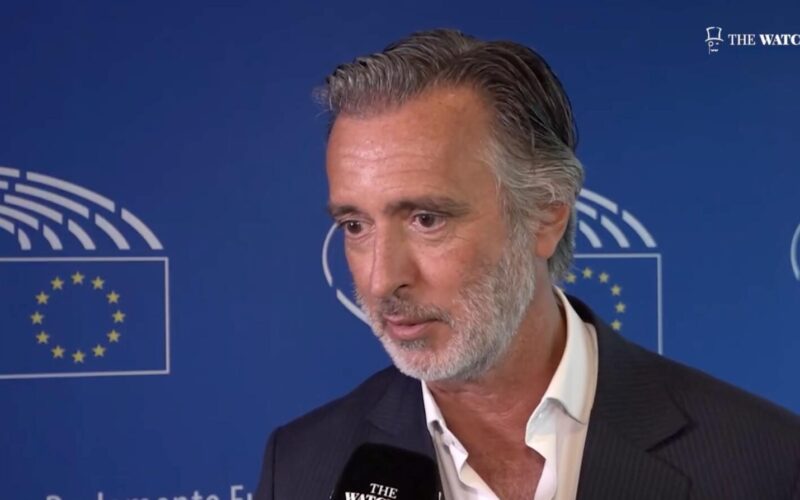
In an interview with The Watcher Post EU, João Cotrim de Figueiredo, Renew Europe’s vice president for Economy and Digital Transformation, delivered a stark warning: “The sense of urgency must be the same as during the pandemic or the invasion of Ukraine. We run an existential risk.”
He extended his appeal beyond his own group, urging other political forces, the media, and civil society to match Renew’s intensity: “We call on other political groups, the media, and civil society to be as vocal and dramatic as us […] because if we don’t reform quickly, we have a problem.”
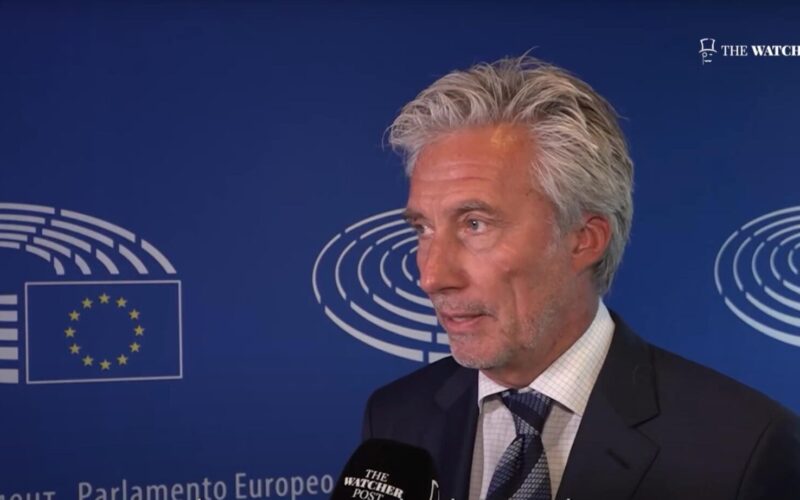
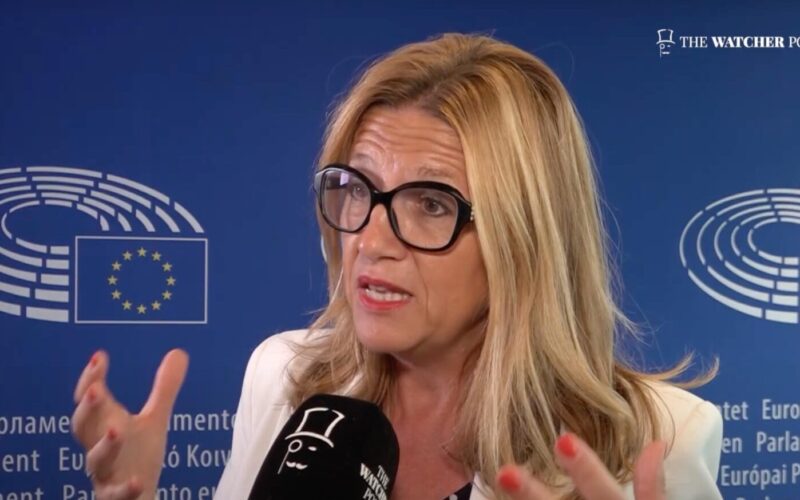
When asked whether any progress had been made, Stéphanie Yon-Courtin, Renew’s coordinator on the ECON committee, was blunt: “No real progress has been made. Everybody agrees on most of the recommendations, but nothing has been done. We need to push the Commission, and make sure the EU survives stronger, [where people feel] dignity and sovereignty.”
Simplification also emerged as a key concern.
On the sidelines, Morten Løkkegaard, Renew’s vice president on simplification and enforcement, stressed the potential impact: “Thanks to the Draghi report we agree on the substance and the analysis, but not on the solutions. […] If you follow Draghi’s simplification proposals, you’d see big growth in Europe and tariffs would be far less damaging.”
Christophe Grudler was clear in his message to The Watcher Post EU, stating that European money should stay in Europe. “We need to have this preference […] to choose Europe first, […] and not giving money directly to the American companies,” he stressed. “If we have money from the EU, that is for the European companies.”
Meanwhile, when asked what she would keep above all from the Draghi report, Brigitte van den Berg, pointed to its emphasis on skills.
“Draghi shows there will be 8 million job openings as the energy transition takes shape,” she said, noting that this focus is crucial to make people feel the report is not abstract policy, but about their lives, their jobs, and their future.
By the time Cotrim de Figueiredo wrapped up the event, the room buzzed with a mix of urgency and ambition. The anniversary appeared to signal pressure on the Commission to deliver and encourage member states to commit while hinting that Europe should not let Draghi’s hard-won consensus fade into distant memory.
Related posts

by Paolo Bozzacchi | 28 November 2025
OPINION – Brexit proves the UK was better off in the EU
by Arianna De Stefani | 28 November 2025
Digital safety for kids takes EU floor