Economics / News
One year after Draghi, Nestoras demands results on EU competitiveness
By Editorial Staff
A year after Mario Draghi laid out his blueprint for European competitiveness, the EU still faces a hard question: is it delivering on the promises, or letting momentum slip? At a European Parliament event hosted by Renew Europe, policymakers and experts gathered to reflect on the landmark report and hear from Founding Director of the European Policy Innovation Council (EPIC), Dr. Antonios Nestoras, who unveiled a new tool tracking Brussels’ progress.
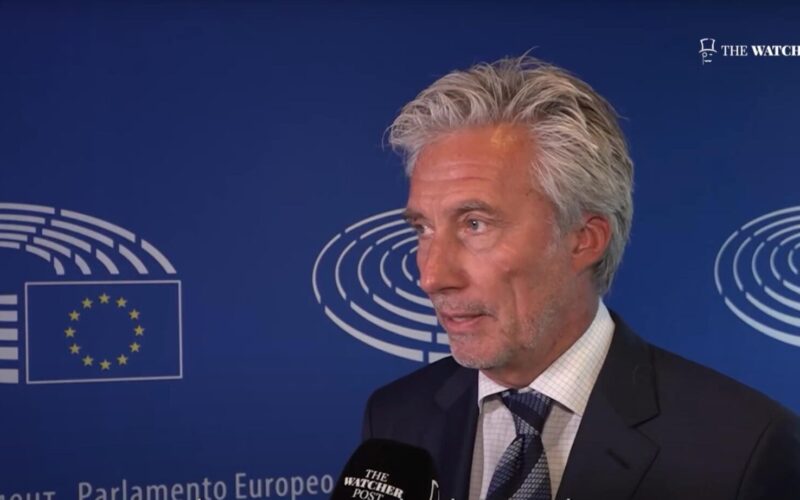
The Draghi Observatory and Implementation Index, presented by Nestoras, is designed to monitor how the EU is translating Draghi’s recommendations into tangible action.“It’s the only mechanism we currently have to monitor and track the implementation of the Draghi Report,” Nestoras said in a follow-up interview at The Watcher Post EU: “People have expectations because this was a pledge, a promise endorsed at the highest level. Now, they finally have a way to know what’s been delivered and what hasn’t.”
The Draghi Report: A benchmark for the EU
Commissioned by the European Commission, the Draghi Report spans more than 400 pages and offers hundreds of policy recommendations, from energy and capital markets to digital transformation. Its stated goal: secure Europe’s long-term competitiveness in an era of intensifying global rivalry.
Yet progress has been uneven. While initiatives such as the Competitiveness Fund and Clean Industrial Deal are taking shape, gaps remain in energy, investment, and enforcement of the single market.
Nestoras acknowledged the political and institutional hurdles slowing implementation. “I’m not ignorant of the fact that the EU legislative process is complicated,” he said, citing resistance across multiple governance levels, from the Commission to national parliaments.
Still, he insisted that the EU could move faster. “It’s absolutely feasible to implement the vast majority of the report before the 2029 elections. If the EU decides it wants to move forward, it can.”
Energy first
When asked to name Europe’s most urgent priority, Nestoras was unequivocal. “There’s absolutely no doubt, energy is the number one priority,” he said. “If we have competitive energy prices, then the rest of the sectors can also be competitive in their products.”
For Nestoras, energy is inseparable from the continent’s industrial backbone, particularly energy-intensive industries like aluminium and steel, and from access to critical raw materials.
The message echoes Draghi’s original blueprint, which positioned energy costs and building a genuine energy union as essential prerequisites for sustainable growth.
Striking the right balance
The EU has built some of the world’s strictest environmental and consumer standards, but Nestoras warns that overregulation can backfire.
“Balance is the key here,” he explained. “We have created the most socially responsible and environmentally conscious industry in the world. But now the question is: how do we support them to become more competitive? How do we help them export more, innovate more?”
He pointed to sectors already undergoing major transitions: synthetic and biofuels replacing fossil fuels, electric vehicles phasing out combustion engines, and heavy industry shifting toward green steel and sustainable aluminium.
“Even the tobacco industry, once synonymous with producing harmful cigarettes, has radically shifted course. Today, it is investing millions into cutting-edge research to develop smoke-free, high-tech alternatives that are fully European and aligned with risk reduction and public health goals. These innovations have the potential to deliver profound social and economic benefits. Yet, instead of encouraging this transformation, Brussels responds with threats of new taxes, sweeping bans, and suffocating regulations”.
As Nestoras emphasized, “punishing progress sends the wrong message, not just to this industry, but to any sector willing to invest in better solutions for society
Europe under the microscope
Europe is not just slowing itself down when it stifles innovation. It is sending opportunities overseas. “We curb our natural gas production and then buy from the U.S. or, until recently, from Russia. We are holding back on critical raw materials, and then we import them from China,” Nestoras said.
The result is economic dependence and a lost chance to shape global standards.
Renew Europe echoed the warning, calling for a “true enforcement union” on digital policy, noting that fragmented national rules undermine Europe’s ability to act as one.
Nestoras delivered a stark warning at policymaker credibility. “For the first time in recent history, the European integration project is not some detached bureaucratic process. Every citizen feels that it affects their daily lives,” he said. From energy bills to supply chains, competitiveness is no longer abstract.
That visibility raises the stakes. “People are expecting to see results. The effectiveness of increasing competitiveness, reigniting the economy, and growth on the continent, will be the benchmark upon which this Commission will be judged,” he added.
Related posts

by Paolo Bozzacchi | 28 November 2025
OPINION – Brexit proves the UK was better off in the EU
by Arianna De Stefani | 28 November 2025
Digital safety for kids takes EU floor